
Living in Vermont (and much of New England) means being surrounded by natural beauty, towering evergreens, rolling hills, and crisp mountain air. But if your home is nestled under or near pine trees, you already know the challenges that come with pine needles. They don’t just carpet your yard; they also find their way onto your roof, into your gutters, and even into your attic if left unchecked.
This raises a key question for homeowners: What is the best roofing material for dealing with evergreen pine droppings? Not all roofs handle needles, sap, and constant shade equally well. In this blog, we’ll explain the unique problems pine trees cause, review different roofing materials, and show why metal roofing is often the best choice for homes in evergreen-heavy areas.

The Problem With Evergreen Pine Droppings on Roofs
Pine trees shed needles year-round. Unlike broadleaf trees that drop leaves seasonally, evergreens deposit small amounts of debris continuously, creating several roofing challenges:
- Moisture Trapping – Needles form dense mats that hold water against the roof surface, speeding up deterioration.
- Sap Damage – Pine sap is acidic and sticky, which can break down asphalt shingles and stain lighter roofing surfaces.
- Clogged Gutters – Needles quickly accumulate in gutters, leading to backups, ice dams, and water intrusion.
- Moss and Mold Growth – Shade from evergreen trees plus trapped moisture creates the perfect environment for algae, moss, and mildew.
Choosing the right roofing material makes a huge difference in minimizing these problems.
Evaluating Roofing Materials Under Evergreen Pine Trees
Let’s take a look at how common roofing materials perform when exposed to heavy evergreen debris.
Asphalt Shingles
Asphalt shingles are popular for their affordability, but they aren’t the best for homes under pines. Needles lodge between shingle tabs and retain moisture, which can cause premature curling, granule loss, and even leaks. Regular sweeping and gutter cleaning are a must.
Slate & Tile
Slate and tile are extremely durable but heavy, requiring reinforced structures. While they can last a lifetime, pine needles tend to gather in the grooves, and cleaning them off can be difficult without breaking tiles.
Rubber Membrane (EPDM/TPO)
For flat or low-slope additions like porches or garages, single-ply roofing offers easy cleaning and solid waterproofing. However, for pitched residential roofs, membranes are less common compared to shingles or metal.
Metal Roofing — The Clear Winner
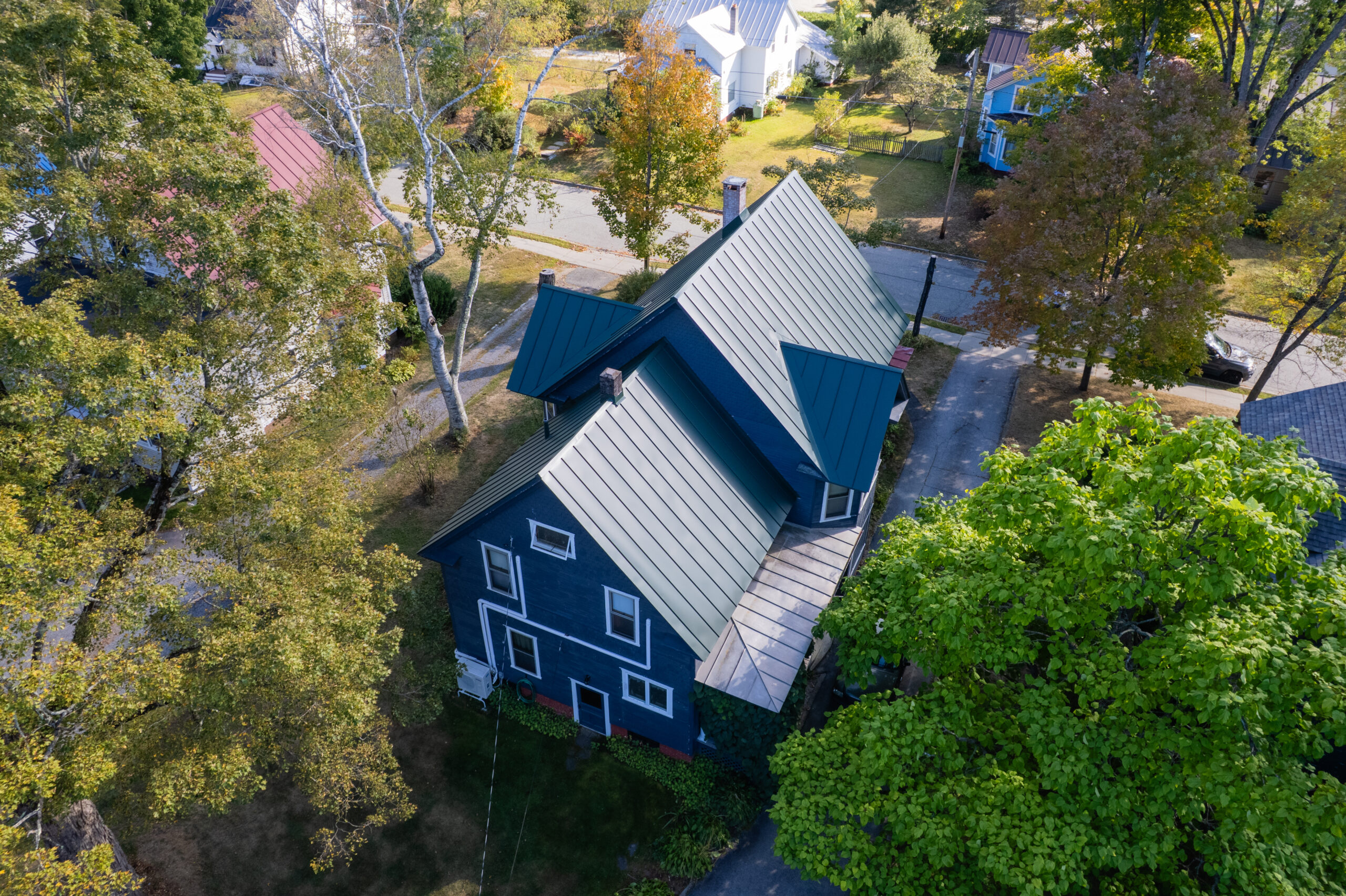
A smooth, durable surface and long lifespan make metal roofing the best option for homes near evergreen trees. Pine needles tend to slide off naturally, sap doesn’t penetrate protective finishes, and cleaning is simple. Whether you choose standing seam or corrugated panels, a metal roof provides unmatched resistance to pine debris.
Why Metal Roofing Excels in Evergreen Environments
Needle Shedding – The slick surface and steep pitch of many metal roofs allow needles to slide off with wind or rain. Unlike asphalt shingles, which have rough textures and overlapping tabs where needles can easily get stuck, metal roofing is smooth and continuous. This makes it much harder for pine needles to accumulate. On pitched roofs, gravity naturally helps debris slide down, while rainfall or a light breeze will usually finish the job. This self-cleaning quality drastically reduces buildup, meaning less time spent on ladders sweeping needles and fewer opportunities for trapped moisture to cause damage.
Sap Resistance – Protective coatings prevent pine sap from corroding or staining the surface. Pine sap is sticky, acidic, and notoriously difficult to remove. On asphalt or wood shingles, it can penetrate the surface, causing staining, softening, or even breakdown of the material over time. Metal roofs, however, are manufactured with specialized finishes such as PVDF (polyvinylidene fluoride) or SMP (silicone-modified polyester) coatings. These finishes not only resist corrosion but also prevent sap from bonding permanently to the roof’s surface. Homeowners benefit from a roof that maintains its appearance and performance, even in areas where pine sap is unavoidable.
Long Lifespan – Metal roofs last 40–70 years, easily outpacing asphalt shingles in evergreen environments. Pine needles and sap accelerate the aging of traditional roofing materials, but metal roofing is built for endurance. Even in harsh climates like Vermont’s, where roofs face heavy snow, ice dams, and tree debris, metal panels resist warping, cracking, and rot. With proper installation and routine inspections, a metal roof can last two to three times longer than an asphalt roof, offering peace of mind for decades and reducing the need for costly replacements.
Low Maintenance – Minimal cleaning and fewer repairs mean homeowners save time and money. Because needles don’t cling to metal roofs and sap doesn’t easily damage them, upkeep is simple. Homeowners can usually rely on rain and seasonal breezes to do most of the cleaning work. Occasional inspections and gutter clearing are still important, but major repairs, like replacing damaged shingles or treating rotted wood, are rarely needed. This reduced maintenance burden translates into both immediate convenience and long-term savings, making metal roofing one of the most cost-effective options for properties surrounded by evergreens.
Energy Efficiency – Reflective metal roofing reduces heat gain, making it both eco-friendly and cost-saving. Modern metal roofing comes in reflective finishes that bounce solar radiation away from the home. This “cool roof” technology keeps roof surfaces cooler, which helps stabilize indoor temperatures during hot summer months. For homeowners, this means lower energy bills from reduced air conditioning use and improved comfort throughout the home. Environmentally, reflective metal roofing decreases a building’s overall energy consumption, making it an excellent choice for eco-conscious homeowners looking for sustainable roofing solutions.
Solar Ready – Metal panels are an excellent base for solar installations, tying into the rising demand for evergreen roofing and solar solutions. As more Vermont homeowners explore solar energy, roof compatibility becomes a major consideration. Metal roofing is particularly well-suited for solar panel installations because panels can be attached with clamps rather than penetrating the roof surface, which preserves waterproofing integrity. The long lifespan of metal also complements the 25–30 year lifespan of solar arrays, ensuring that homeowners won’t need to replace their roof before their solar investment pays off. By choosing metal roofing, property owners future-proof their homes for renewable energy upgrades, aligning perfectly with the trend of evergreen roofing and solar systems.
How to Safely Remove Pine Needles from a Roof
Even with a durable material like metal roofing, pine needles will still accumulate in valleys, gutters, and other catch points. Regular removal helps extend the life of your roof, keeps water flowing properly, and prevents damage from trapped moisture. Here are the best practices for keeping your roof clear:
1. Use the Right Tools
- Roof Rake or Soft-Bristled Broom – Lightweight tools with non-abrasive bristles are safest for clearing debris without scratching roofing surfaces.
- Leaf Blower – A blower is especially effective for metal roofs, as needles slide easily once loosened. Always use caution on ladders or consider a telescoping blower attachment.
2. Prioritize Safety
- Never walk directly on a steep or slippery roof to sweep off needles.
- Use stable ladders, harnesses if necessary, and always have someone nearby for assistance.
- If the roof pitch is steep, it’s best to hire a professional roofing company that’s equipped to handle debris removal safely.
3. Focus on Valleys and Gutters
Pine needles often pile up where roof planes meet or where gutters sit. Left unchecked, this debris can trap water and lead to rot or ice dams in winter. Regularly clearing gutters with guards or screens will also prevent blockages that cause overflow.
4. Schedule Seasonal Cleanings
Homes surrounded by evergreens may need pine needle debris cleared multiple times a year, especially in late fall before winter and again in spring. Consistent upkeep reduces the risk of long-term damage and makes each cleaning easier.
5. Consider Preventive Measures
- Install gutter guards to keep needles from clogging downspouts.
- Trim back overhanging branches where possible to reduce the volume of needles landing on the roof.
Choosing the Right Contractor for Evergreen Environment Roofing
The roofing material you choose matters, but so does the contractor who installs it. A high-quality evergreen roofing company should provide:
- Proven Track Record – Positive customer testimonials and long-standing experience.
- Thorough Reviews – Look at evergreen renovations & roofing reviews or evergreen roofing reviews to gauge reliability.
- Expert Installation – Especially important for metal roofing, where precision impacts long-term performance.
- Comprehensive Services – From evergreen metal roofing to solar integration and maintenance, the best contractors handle it all.
When reading evergreen roofing reviews, the themes are always the same: customers want durability, value, and peace of mind. At VT Roofing, we’re proud to deliver those same qualities right here in Vermont. Contact us today for a free roofing estimate.